Concrete vs Clay vs Slate: Roof Covering Prices and Scope Explained
Compare covering prices per square metre without mixing supply-only and installed figures. Includes lifespan, weight and quote checklists.
In this guide
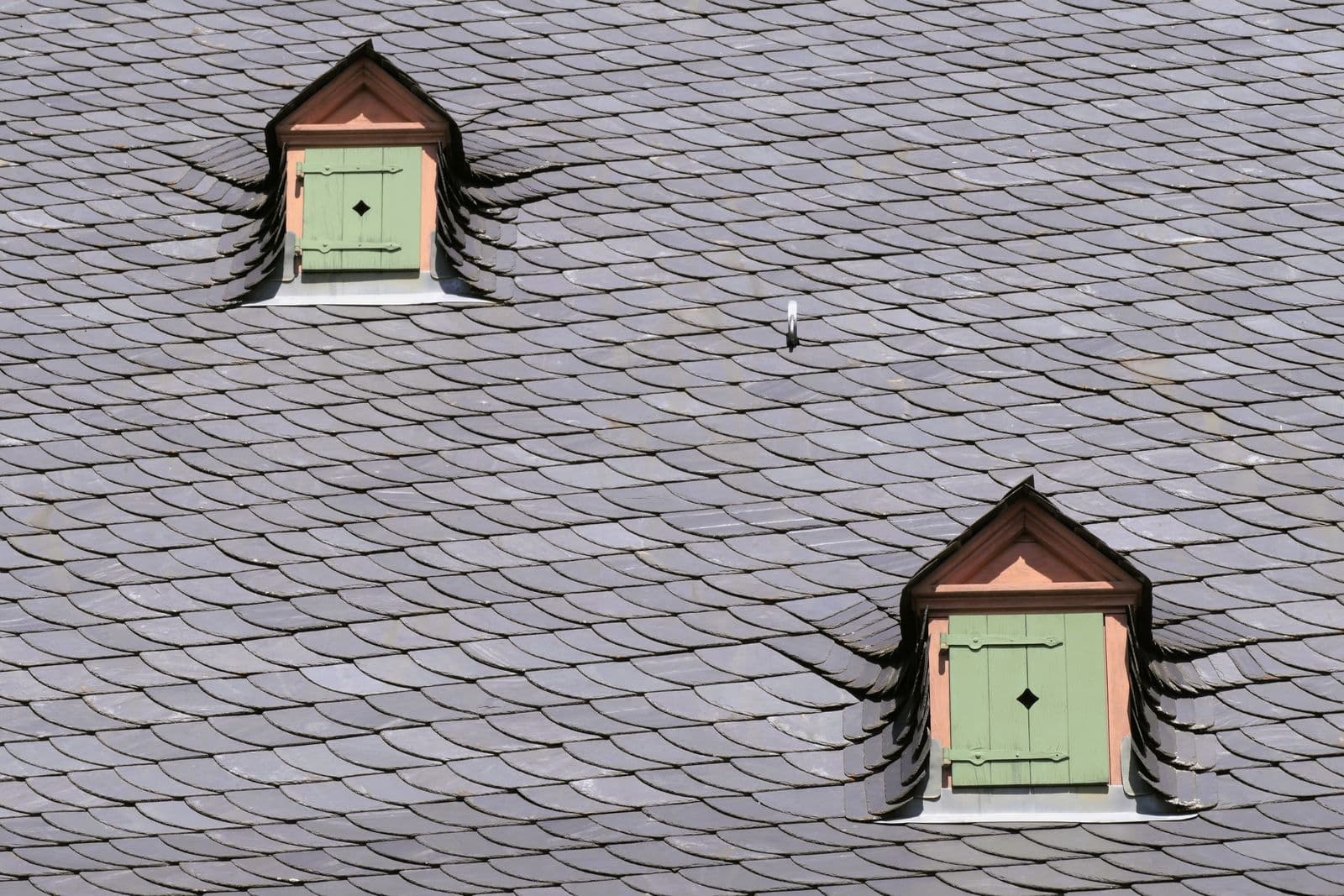
Supply-only, per m². Concrete interlocking tiles are the UK's default covering at £14 – £30 per m². Clay plain tiles cost £30 – £60, fibre cement slate £18 – £42, and natural slate £45 – £140+ — imported Spanish at the bottom, Welsh at the top.
Those supply prices are only part of the picture, because laying speed differs hugely between coverings. Interlocking tiles cover around 10 tiles per m²; plain tiles need about 60. Compare installed costs — not just the material line — using our calculator or the materials cost guide.
Concrete interlocking tiles
The workhorse of UK housing. At roughly £1.40 – £2.20 per tile and 9.7 tiles per m², branded ranges like Marley Modern or Mendip come in around £14 – £22 per m² supplied. They lay fast — a two-person gang covers 13 – 18 m² a day — and last 40 – 60 years. The trade-off is aesthetics: colours fade and cheaper profiles can look flat on period houses. Installed all-in on a typical roof, expect roughly £80 – £120 per m² including felt, battens and labour.
Clay plain tiles
Machine-made clay tiles run £30 – £60 per m² supplied; handmade tiles reach £90+. Clay keeps its colour for 60+ years and is often required in conservation areas — check before substituting concrete lookalikes. The catch is labour: at roughly 60 tiles per m², a gang lays about 9 m² a day, so a 65 m² roof takes seven-plus days versus five for interlockers. That alone adds £800 – £1,200 of labour to the same roof.
Natural slate
Imported Spanish slate starts around £45 – £65 per m² and Welsh slate reaches £95 – £140+. Slate is the slowest covering to lay — around 8 m² per gang day — and the heaviest, so rafters may need strengthening. The payoff is lifespan: a well-laid slate roof can exceed 100 years, which is why it dominates premium work and is often mandatory on listed buildings. On a 65 m² semi, slate pushes the total to roughly £11,000 – £14,000 mid-range versus £8,750 in concrete.
Fibre cement and composite slate
The middle option at £18 – £42 per m² supplied. Modern fibre-cement and composite slates are lighter than natural slate, faster to lay and visually convincing from the ground, with a 30 – 50 year service life. They suit roofs where slate looks right but the structure or budget says otherwise — and they avoid the structural check a switch to natural slate demands.
Lifespan beats price per m²
Divide the covering cost by years of service and the ranking flips: concrete at ~45 years and slate at 100+ often work out similarly per year. If you plan to stay long-term, or the house is in a conservation area, slate and clay earn their premium. For a 10 – 15 year horizon, concrete interlockers are hard to beat.
What the quote must specify
- Named product and profile — 'concrete tiles' covers £14/m² and £40/m² products
- Supply-only or supplied and fitted — never mix the two when comparing
- Ridges, verges, valleys and hips, priced per linear metre — dry-fix vs mortar
- Membrane and batten spec: breathable felt, treated battens, correct fixings
- Whether the price assumes your existing roof structure can take the weight
Weight is a structural issue
Never switch coverings without checking the structure. Natural slate and clay are significantly heavier than concrete interlockers — moving from a lightweight covering can overload rafters sized decades ago. A structural engineer's check costs £250 – £500 and is cheap insurance on a five-figure job. Changing to a heavier covering also triggers a building regulations application regardless of the area covered — see Planning Portal's guidance on thermal elements.
Related guides

How Much Does a New Roof Cost in the UK? (2026 Planning Guide)
A dated cost breakdown, clear replacement scope and practical steps to build a roofing budget from measurements, allowances, quotes and contingency.
Roofer Day Rates UK: Labour, Gang Rates and Scope
What roofers actually charge per day in 2026, what a gang day buys, and why a day rate alone is not a complete quote for a re-roof.
Felt vs EPDM vs GRP: Flat Roof Prices and Lifespan Compared
Separate membrane prices from decking and insulation, compare realistic lifespans and avoid the quotes that reuse a rotten deck.